Stains in a Clear Base Glaze - Watermelon, Limeade, & Sea Glass
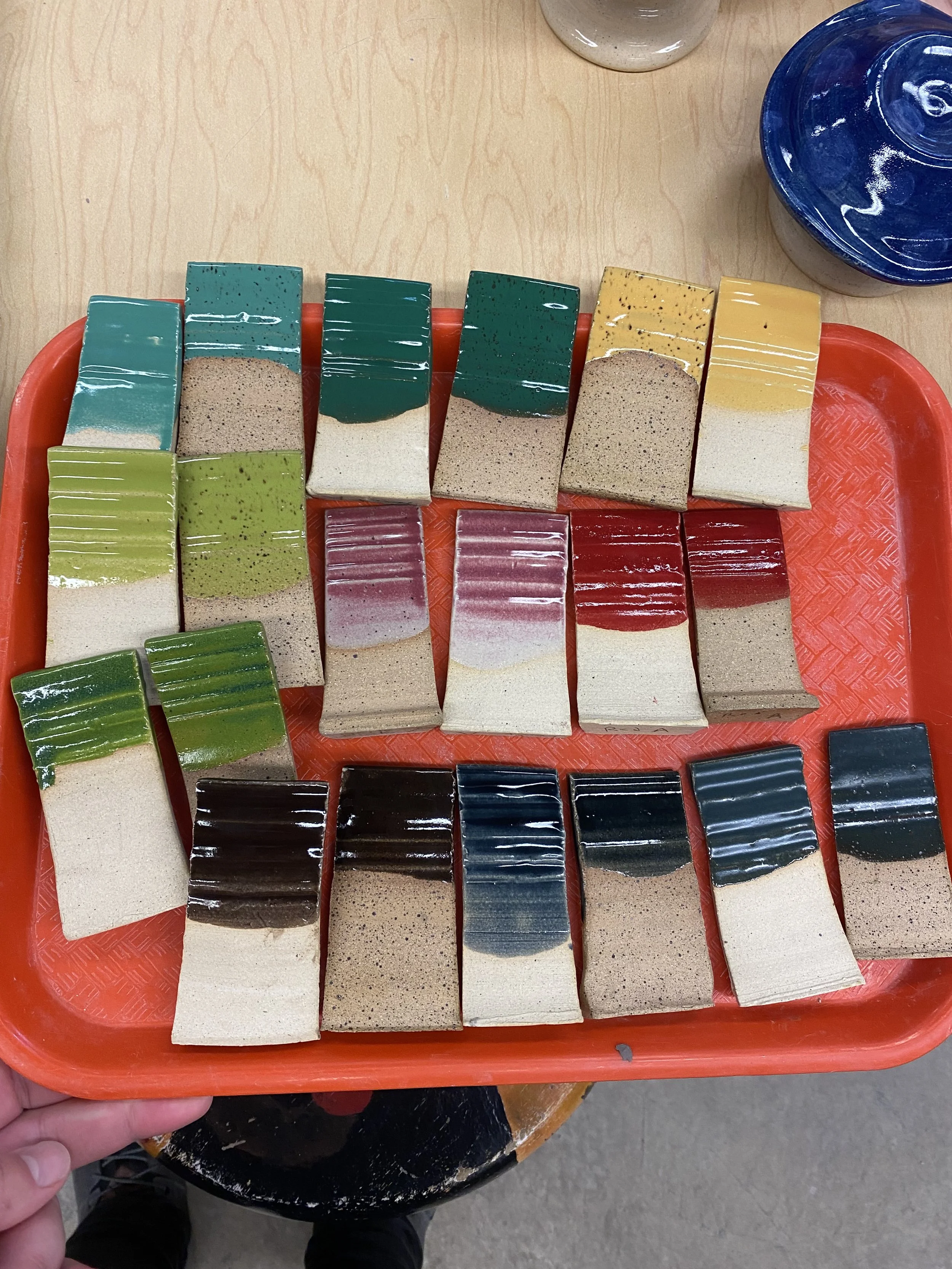
You can always find my posted glazes on Glazy here - https://glazy.org/u/amberloftypottery/recipes
Let’s Talk About Zircopax -
I have a clear base glaze that works really beautifully with most stains. You can customize the color even further by adding or leaving out zircopax/ultrox. Zircopax and Ultrox are brand names for zirconium silicate. This material is an opacifier or whitener in glazes. Read more about Zirconium Silicate on Digital Fire.
The addition of Zircopax will punch up the color of the stain by giving it some extra opacity. But in turn you lose a bit of the transparency that can be nice with a clear glaze. You do lose some of the color concentration as well. But the color of the stain will be brighter. Think of it like adding food coloring to milk (with zircopax) vs water (no zircopax).
You do sometimes have to add Zircopax/Ultrox to counteract the bubbling that happens with some stains at higher concentrations. Mainly reds and oranges in my personal experience.
And you can use it to your advantage for colors like Pink! A small amount of red stain will go pink with 5% zircopax added.
Let’s Talk About Stains -
The big name in ceramic stains is Mason. You hear people say Mason Stains like those are the only stains available (similar to the Kleenex situation). They are the best quality and the company is very good about giving us all the info about their stains. But there are alternative stains that we can use.
Ideally, I would be using Mason stains exclusively. Because they are so consistent with the colors and so transparent about when stain formulations change. But that does come with an extra cost. And as a community studio owner, I can’t justify those prices when there are cheaper stains that make beautiful glazes.
I have had consistent results with US Pigments so far. I’ve bought Bermuda 6242 from US Pigment over the last 2 years it has always produced the same result. (Albeit a slightly different and less intense color than Masons Bermuda 6242.) I haven’t had any inconsistency issues with stains from US Pigment so far.
So all of my stain glazes and tests are made with US Pigment stains. Stains bought directly from Mason may have different color results.
Onto the Glaze Recipes -
Amber’s Clear D Base for Cone 6
Flint/Silica 31
Gillespie Borate 26
Neph Sye 25
Whiting 8
EPK Kaolin 8
Bentonite 2
This base glaze on it’s own will sometimes have minor crazing issues on tight clay bodies with super low absorption. With the addition of the stains and/or zircopax we haven’t seen any crazing though (Something something flux something something glaze expansion…)
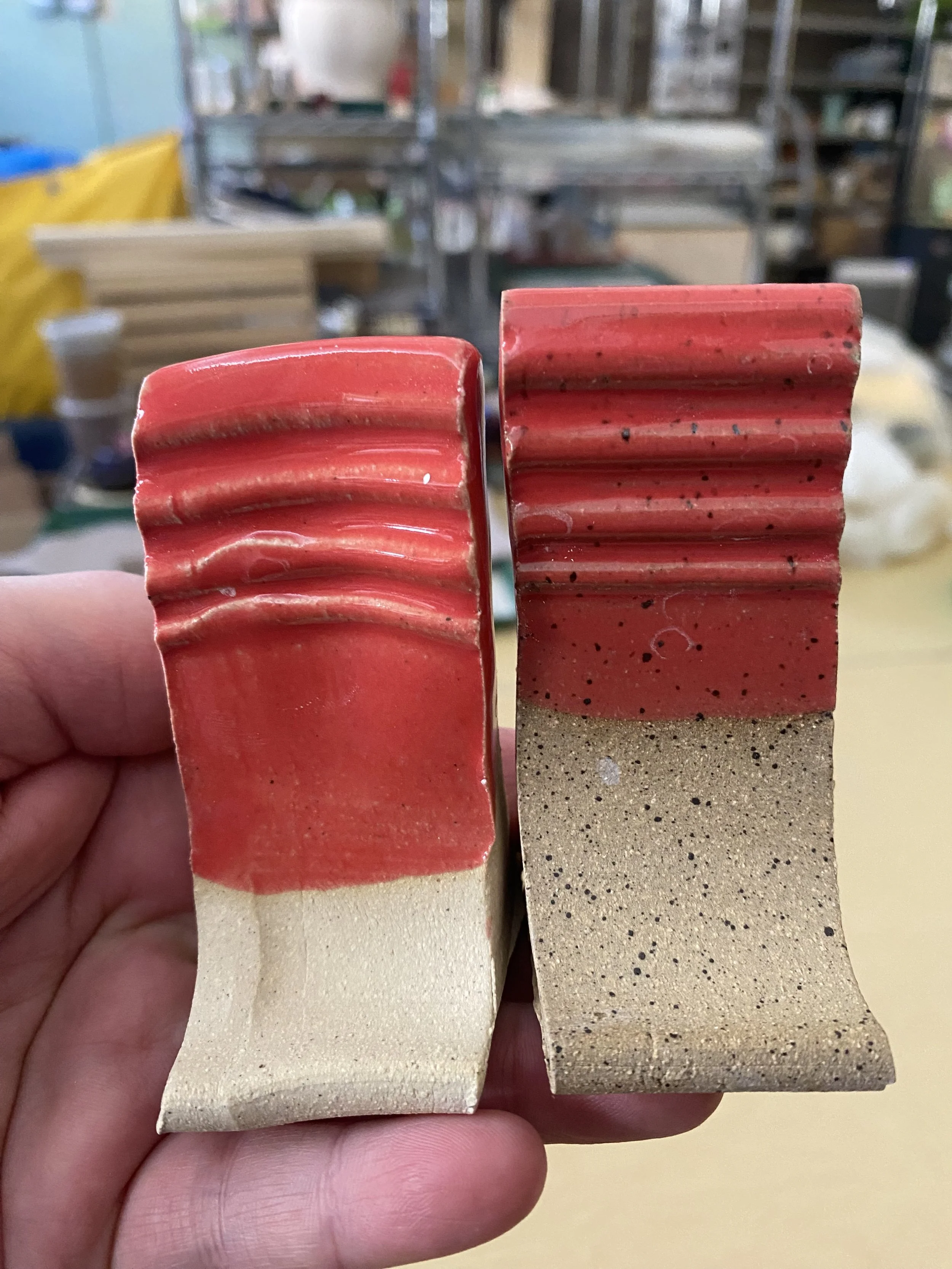
On Standard 553 (Left) and Standard 112 (Right) to Cone 6
Watermelon
6% Red 6021 Stain from US Pigments
5% Zircopax (You need some zircopax to even out the bubbling on this one.)
Students and members are loving this glaze. It’s a nice vivid red without being to dark. If you want a true dark red - try Red 6088 instead. I also have a hunch this 6021 Red mixed with 6027 Orange could get you a really nice coral, peach, or salmon color.
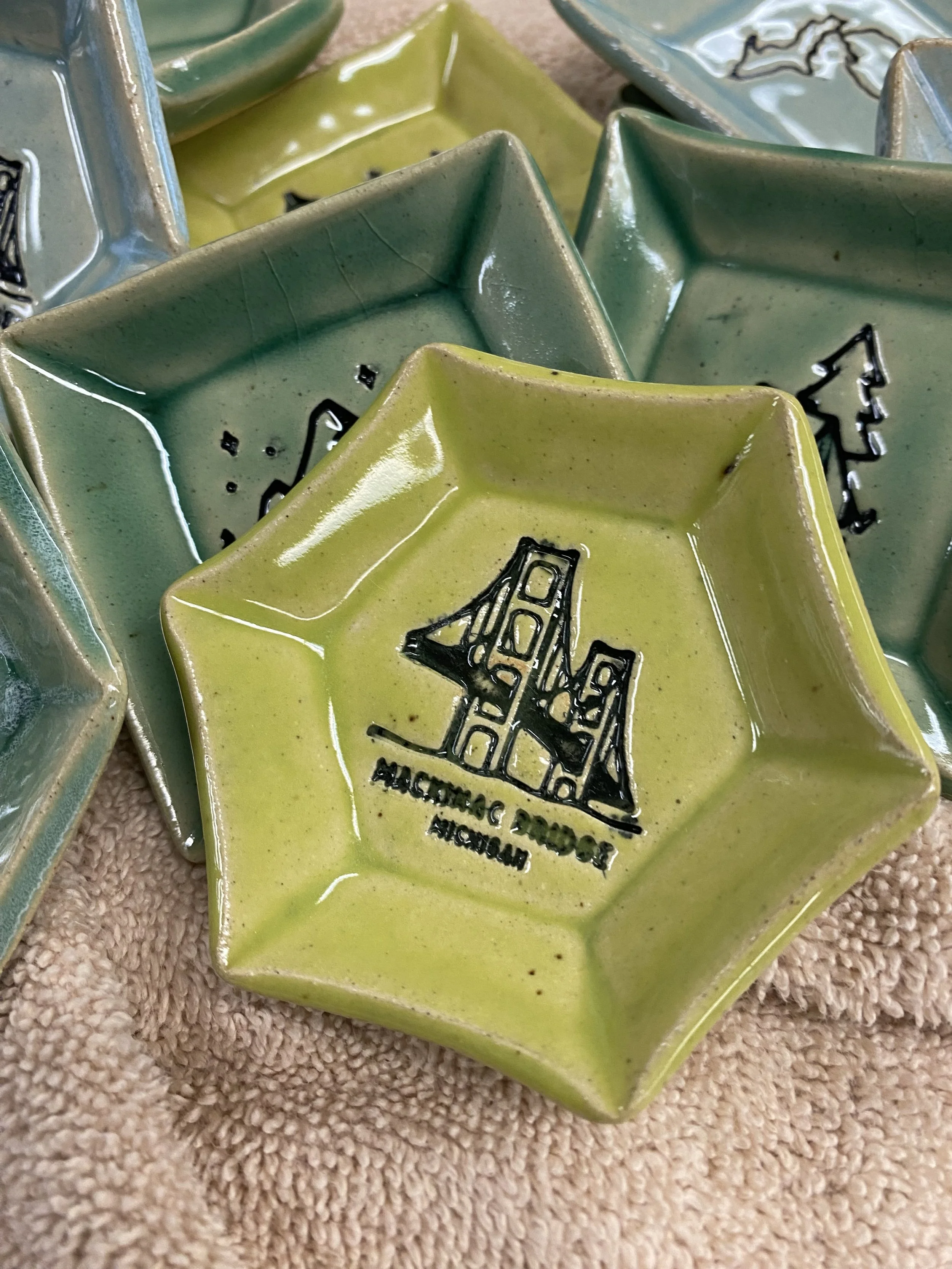
On Standard 553
Limeade
8% Chartreuse Stain from US Pigments
This one is lime with a bit of a yellow twist on our Buff clay. Very lime green on a white clay body. A little bit more pukey yellow on a brown clay body. I am very interested in what the actual Mason brand chartreuse stain would look like. No Zircopax in this one. We wanted a true translucent glaze here. But I do think adding zircopax to opacify would really suit this stain color. I think I’m biased against a true chartreuse to be fair.
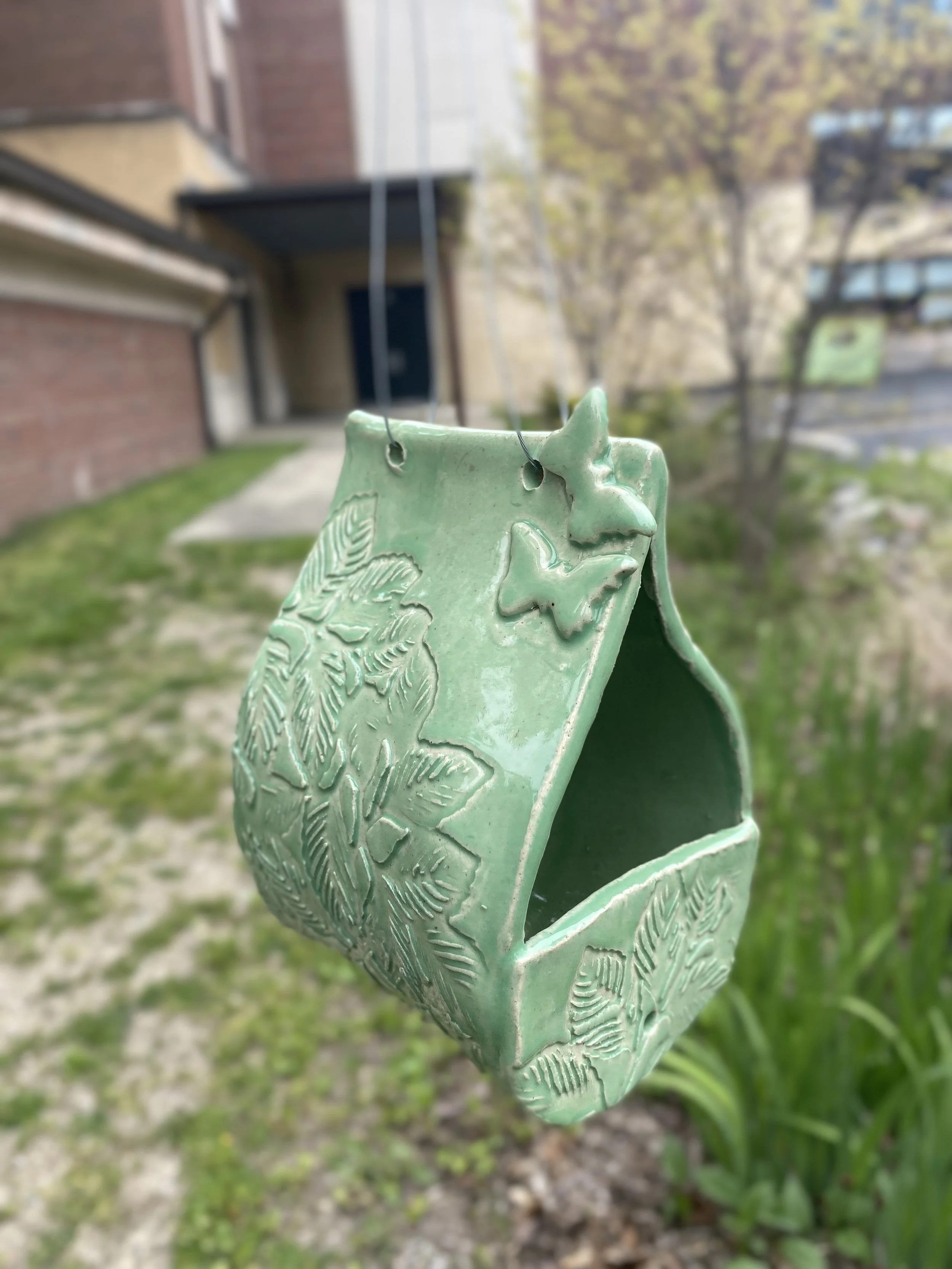
On Standard 553
Sea Glass
6% Bermuda 6242
Bermuda is a classic. Copper carb green. In this translucent glaze though its nice and soft.